Preparing Your Pet for Emergencies: Your SCV Earthquake & Fire Guide
· By SoCal Scoopers · Pet Safety
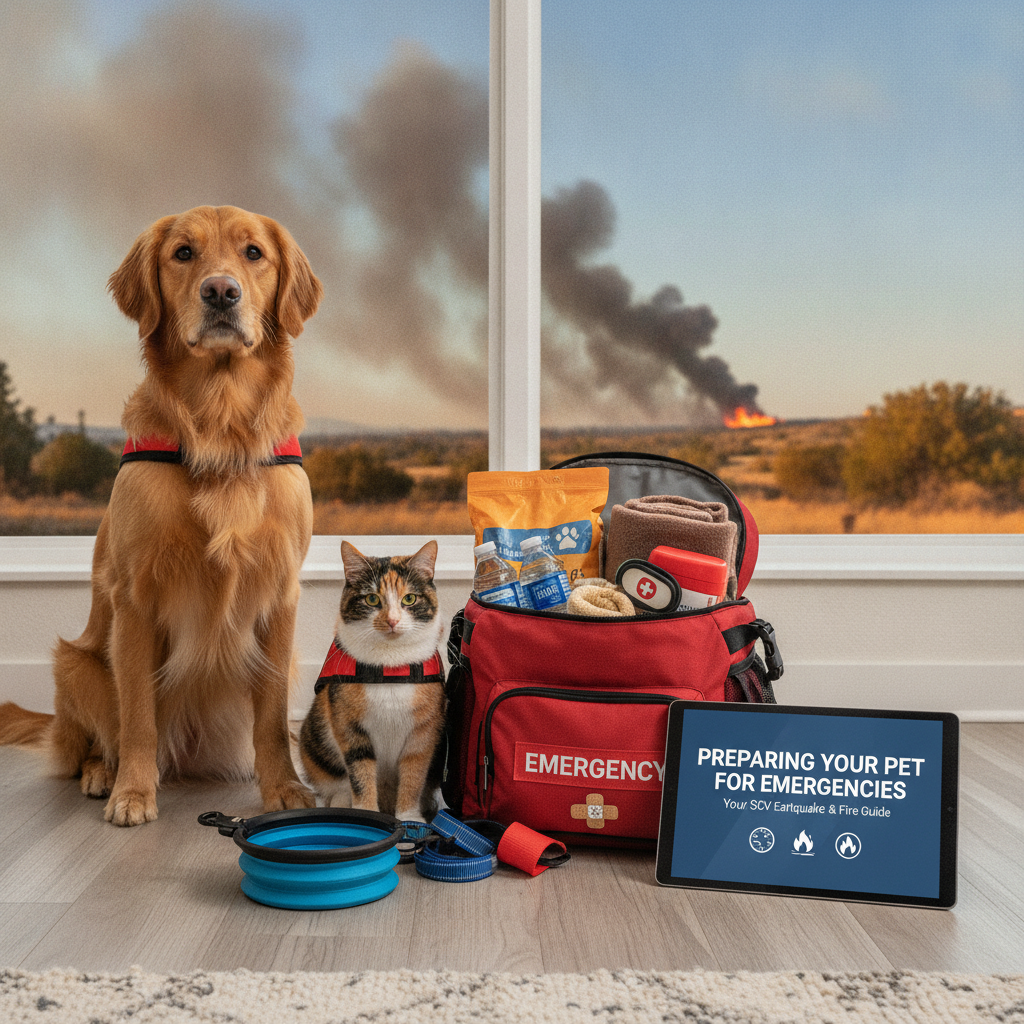
Living in Santa Clarita, we're blessed with beautiful canyons, sunshine, and a vibrant community. But let's be honest, we also live with the constant hum of a unique set of challenges: earthquakes and wildfires. As devoted pet parents, our first thought during any emergency is always, "What about my furry family member?" Whether it's the sudden jolt of a shaker or the distant smoke of a brush fire, being prepared isn't just an option; it's a responsibility. At SoCal Scoopers, we care deeply about the well-being of your pets, which extends beyond daily scoop services to their safety during critical times. This guide is your local, practical roadmap to ensuring your pets are ready for anything our SCV environment throws our way.
Why Every SCV Pet Parent Needs an Emergency Plan
Santa Clarita, nestled in Southern California, sits near active fault lines and is surrounded by vast wildland areas prone to devastating fires. We've seen firsthand the impact of both, from the Northridge earthquake to numerous Canyon Country wildfires. These aren't abstract threats; they're very real possibilities that can strike without warning. During an emergency, chaos can ensue, and resources can be stretched thin. Having a pre-planned strategy for your pets can mean the difference between a stressful search and a swift, safe evacuation. It minimizes panic, ensures their immediate needs are met, and increases the chances of staying together.
Assembling Your Pet's Lifesaving "Go-Bag"
Think of this as your pet's personalized survival kit, ready to grab at a moment's notice. Store it in an easily accessible location, like near an exit, and check it every 6-12 months for expired items or updated needs.
- Food & Water: At least 3-7 days' supply of non-perishable food in an airtight, waterproof container. Don't forget a can opener if needed, and collapsible bowls. Store several gallons of fresh water (or purification tablets) per pet.
- Medications & First-Aid: A 7-day supply of any prescription medications (check expiration dates!). Include a pet-specific first-aid kit with bandages, antiseptic wipes, tweezers, gauze, and veterinary contact info.
- Copies of Records: Keep waterproof, sealed copies of vaccination records, medical history, proof of ownership, and recent photos of your pet. A plastic baggie or small, waterproof container works wonders.
- Identification & Leash/Carrier: Ensure your pet has a sturdy leash, collar with up-to-date tags, and a comfortable, secure carrier large enough for them to stand and turn around. Label the carrier with your contact information.
- Comfort Items: A familiar toy, blanket, or even a treat can significantly reduce stress in an unfamiliar environment.
- Waste Bags/Litter & Scoop: Essential for hygiene, especially if you're sheltering in close quarters.
- Flashlight & Batteries: For nighttime visibility and safety.
Identification: The Path Back Home
In the commotion of an evacuation, pets can get separated. Proper identification is your pet's best chance of being reunited with you. Microchipping is paramount; ensure your contact information linked to the chip is always current. Beyond the microchip, a durable collar with a tag displaying your name, phone number, and address (or even "Evacuated Pet" with a secondary contact) is critical. Keep a clear, recent photo of your pet on your phone and a printed copy in your go-bag – this is invaluable if you need to create "lost pet" posters.
Practice, Plan, & Stay Calm (As Much As Possible)
While you can't practice for the exact moment of an earthquake, you can prepare. Know your home's safest spots (away from windows, under sturdy furniture). Identify multiple escape routes from your home and neighborhood. Discuss with family members who is responsible for each pet. If you have multiple pets, practice getting them into their carriers swiftly.
Consider designating an out-of-area contact person. If local phone lines are down, long-distance calls may still go through. Inform this person of your emergency plan so they can help coordinate if your family becomes separated.
Connect with Your SCV Community & Resources
Knowing your local resources can be a game-changer. Research pet-friendly hotels or shelters outside of your immediate evacuation zone. Familiarize yourself with emergency animal shelters in Santa Clarita and surrounding areas that activate during disasters. The Los Angeles County Department of Animal Care and Control is a great resource. Talk to your neighbors – perhaps you can establish a buddy system where you look out for each other's pets if one of you is away during an emergency.
Conclusion: Peace of Mind for Pet Parents
Preparing your pets for an emergency might seem like a daunting task, but it’s an investment in their safety and your peace of mind. As a pet owner in Santa Clarita, taking these proactive steps for earthquakes and wildfires ensures that your beloved companions are as ready as you are. So, take the time this week to start or update your pet's emergency kit, review your family plan, and connect with your community. We hope you never have to use it, but knowing you’re prepared offers an invaluable sense of security for every member of your family, furry ones included.