Decoding Your Dog: An SCV Owner's Guide to Body Language
· By SoCal Scoopers · Pet Care
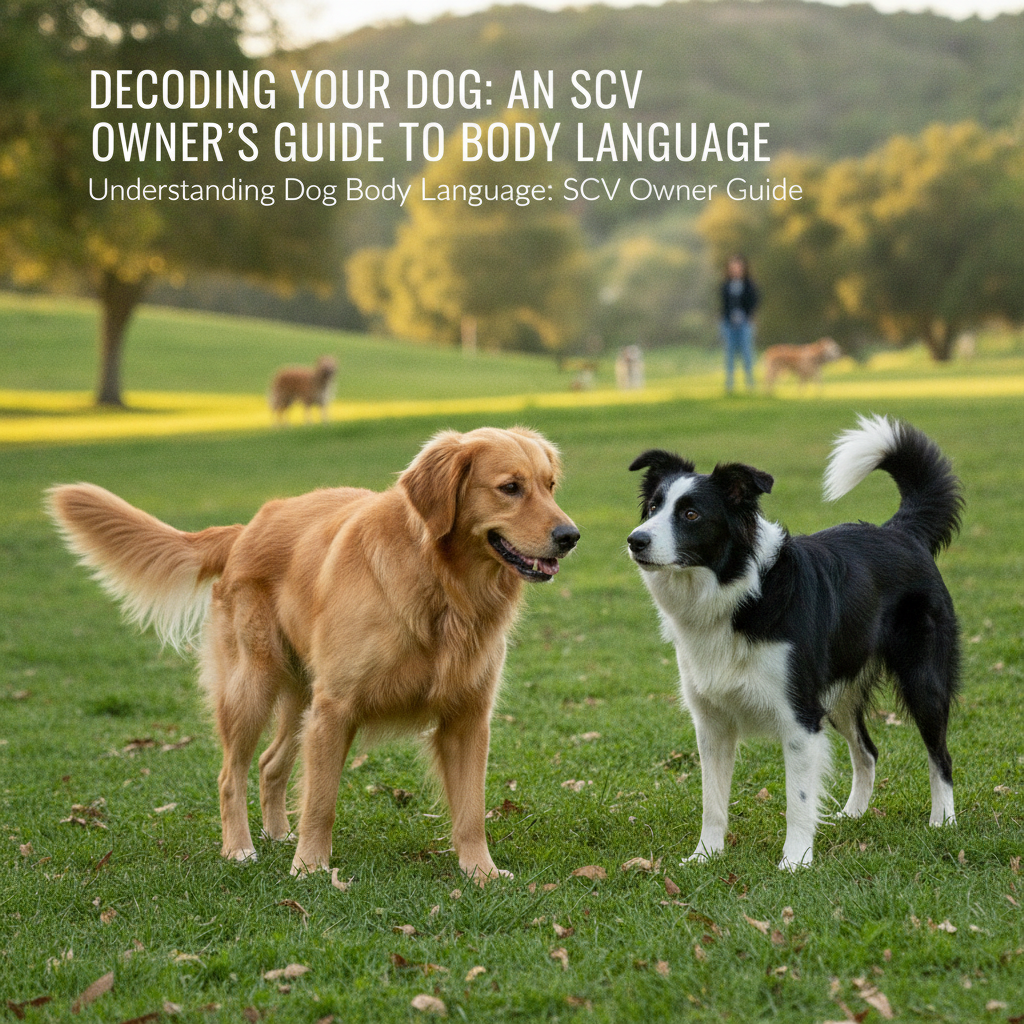
Beyond the Bark: Learning to Speak Your Dog's Language
Here in Santa Clarita, our dogs are part of the family. We take them on hikes through Towsley Canyon, let them run free at Central Bark, and stroll through the neighborhoods of Valencia and Saugus. We do everything with them, but do we truly understand what they’re trying to tell us? Dogs communicate constantly, not with words, but with a complex language of body signals. Learning to interpret these cues is one of the most important things we can do for their safety and well-being. It transforms our relationship from one of simple ownership to one of deep, mutual understanding.
More Than Just a Wagging Tail
Let's start by debunking a classic myth: a wagging tail doesn't always mean a happy dog. While a loose, full-body wag (the classic “helicopter tail”) is a good sign, the tail's height and speed tell a much more detailed story. Think of it as a furry emotional barometer.
- High, Stiff, Fast Wag: This often indicates arousal or excitement, but not always in a friendly way. This is a dog on high alert, assessing a situation. It's a good time to be cautious.
- Low, Tucked Wag: A tail tucked between the legs is a clear sign of fear, anxiety, or submission. This dog is feeling insecure and needs space or reassurance.
- The “Propeller” Wag: A big, circular, whole-body wiggle is the universal sign of pure joy. Your dog is thrilled to see you!
Paying attention to the type of wag, rather than just the wag itself, can prevent misunderstandings at the dog park or on a walk.
Reading the Whole Picture: Eyes, Ears, and Mouth
A dog’s face is incredibly expressive. When you're trying to figure out their mood, look at the combination of their facial features.
- Eyes: Soft, relaxed eyes with normal-sized pupils indicate a calm dog. On the other hand, a hard stare, or showing the whites of the eyes (often called “whale eye”), is a sign of stress, fear, or potential aggression. Your dog is communicating discomfort.
- Ears: A dog's ears act like satellites. Relaxed, neutral ears are a sign of a content pup. Ears that are pricked forward mean they are alert and focused on something. Ears pinned flat against the head can mean fear or submission.
- Mouth: A relaxed, happy dog might have a slightly open mouth, almost like a smile. But watch for stress signals like excessive lip licking, yawning when not tired, or panting when it's not hot. A closed, tight mouth with pulled-back lips is a sign of tension and stress. A curled lip showing teeth is an unmistakable warning to back off.
Posture and Piloerection: The Body's Story
A dog’s overall posture speaks volumes about their confidence and intentions.
A confident, relaxed dog will stand tall with weight evenly distributed. In contrast, a fearful or anxious dog will try to make itself smaller by cowering, lowering its body, or even rolling onto its back to show its belly in submission. The classic “play bow”—front end down, back end up—is a clear and friendly invitation to play. It's your dog’s way of saying, “Whatever I do next, it’s all in good fun!”
You may also notice the hair on your dog’s back and shoulders stand up. This is called piloerection (or “raised hackles”). It’s an involuntary reaction to arousal—be it excitement, fear, or aggression. It’s not a sign of aggression on its own, but it tells you the dog is in a heightened emotional state and you should pay close attention to other signals.
Putting it all Together: SCV Scenarios
Let's apply this to situations every Santa Clarita dog owner knows:
- At Central Bark: You see a dog with a stiff body, a high, fast-wagging tail, and “whale eye” as another dog approaches its toy. This dog is not playing; it’s resource guarding and feeling uncomfortable. It's a good time to call your dog away and create space.
- Hiking in East Walker Ranch: Your dog suddenly stops, ears forward, body tense, and mouth closed. They've likely seen or heard something (like a coyote or another hiker). Respect their alert status and be ready to leash them up.
- Family BBQ in your Canyon Country backyard: The kids are running around and your dog keeps yawning, licking its lips, and trying to walk away. Your dog is overstimulated and asking for a break. Guide them to a quiet room inside where they can decompress.
Conclusion: Building a Stronger Bond
Learning your dog's language is a gift you give to both of you. It prevents bites, reduces stress, and builds a foundation of trust and safety. By observing these subtle cues, you can become your dog's best advocate, ensuring they feel safe and understood in our beautiful Santa Clarita Valley. And for us at SoCal Scoopers, a happy, stress-free pet is what it’s all about.
References:
American Kennel Club (AKC) - "How to Read Dog Body Language"
The Humane Society of the United States - "Canine Body Language"