Beyond the Bark: A Santa Clarita Dog Owner's Guide to Canine Communication
· By SoCal Scoopers · Pet Care
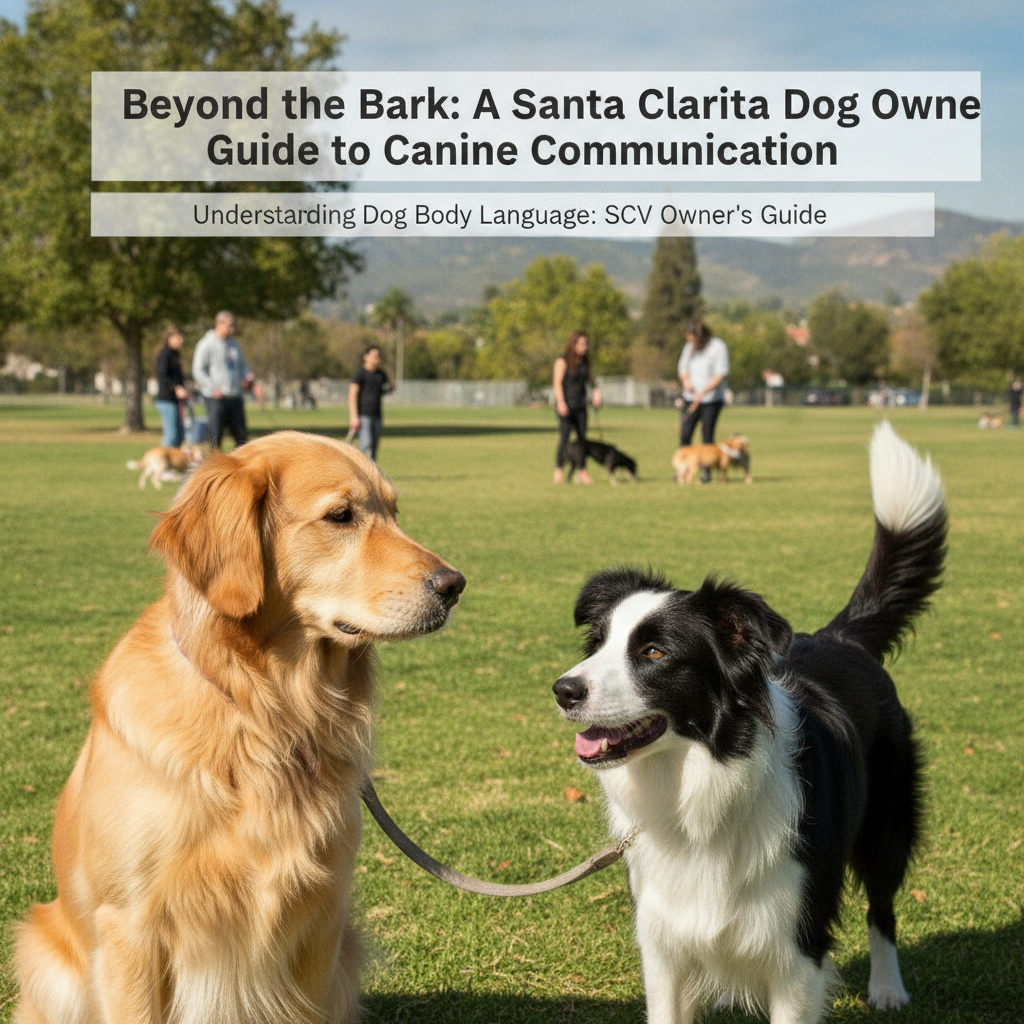
Your Dog is Always Talking. Are You Listening?
Here in Santa Clarita, we’re lucky to have so many beautiful, dog-friendly spaces. From a weekend hike in Towsley Canyon to a playful afternoon at Central Park’s dog park, our four-legged family members are a huge part of the SCV lifestyle. But as we navigate these shared spaces, how well are we truly understanding our companions? Dogs communicate constantly, not with words, but with a complex and nuanced language of body signals. Learning to interpret this language is one of the most important things we can do as pet parents. It strengthens our bond, prevents misunderstandings, and keeps everyone—human and canine—safe and happy.
As your local pet care experts at SoCal Scoopers, we believe a healthy pet relationship goes beyond just a clean yard. It’s about total well-being. So, let's dive into the fascinating world of canine communication and learn what our dogs are really telling us.
The Telltale Tail: More Than Just a Wag
The most commonly misinterpreted signal is the tail wag. We often assume any wag is a happy wag, but the tail’s position and speed tell a much richer story. Think of it as a furry emotional barometer.
- A relaxed, mid-height wag: This is the friendly, content wag we all love to see. The tail may move in a broad, sweeping motion. This dog is likely feeling happy and approachable.
- A high, stiff, fast wag: Be cautious! This often signals high arousal, excitement, or even agitation. The dog is on high alert. It’s not necessarily aggressive, but it’s a good time to assess the situation and give the dog some space.
- A low, slow wag or tuck: A tail tucked between the legs is a clear sign of fear, anxiety, or submission. The dog is feeling insecure and is trying to appear smaller and non-threatening.
- The “Helicopter” Wag: A full, 360-degree circle wag is usually a sign of pure, unadulterated joy! You'll often see this when you return home after a long day.
Ears, Eyes, and Mouth: The Windows to Their World
Your dog’s face is incredibly expressive. By paying attention to their eyes, ears, and mouth, you can get a real-time feed of their emotional state.
Ears:
- Relaxed and Neutral: Ears sitting in their natural position indicate a calm dog.
- Forward and Alert: Pricked-up ears mean your dog is focused on something. They’re curious, alert, and assessing a sound or sight.
- Pinned Back: Ears flattened against the head can mean a few things depending on context. Combined with a low body posture and tail tuck, it signals fear or submission. However, when paired with teeth-baring or growling, it’s a defensive warning.
Eyes:
- Soft Gaze: A relaxed, soft gaze with normal-sized pupils is the look of a comfortable dog. They may even squint their eyes in contentment.
- Hard Stare: A direct, unblinking stare is often a challenge or a threat. It’s best to de-escalate this situation by avoiding direct eye contact and creating space.
- “Whale Eye”: This is when a dog turns its head away but keeps its eyes fixed on something, showing the whites of their eyes (the sclera). This is a classic sign of stress, anxiety, and fear. If you see whale eye, the dog is uncomfortable and needs the source of stress to be removed.
Mouth:
- Lip Licking & Yawning: When not tired or hungry, frequent lip licking and yawning are signals of stress or anxiety. It’s a self-soothing or appeasement gesture.
- Soft, Open Mouth: A slightly open, relaxed mouth with a gentle pant often means the dog is happy and relaxed.
- Tight, Closed Mouth or Pulled-Back Lips: This indicates tension, stress, or fear. If the lips are pulled back to expose the teeth in a “snarl,” it’s a clear warning to back off.
Reading the Whole Picture: Posture Speaks Volumes
No single signal exists in a vacuum. To truly understand your dog, you need to look at their entire body posture.
- Play Bow: The classic “downward dog” pose with the front end down and the rear end up is a universal invitation to play. It’s a dog’s way of saying, “Whatever I do next is all in good fun!”
- Stiff and Frozen: A dog that suddenly becomes rigid and still is a major red flag. They are intensely focused on a potential threat and are deciding whether to fight, flee, or freeze. Do not approach a dog in this state.
- Cowering or Lowered Body: Making themselves smaller by lowering their body, cowering, or even rolling onto their back to expose their belly is a sign of submission, appeasement, or extreme fear.
- Leaning or Pushing: A dog leaning against you is often seeking comfort and showing affection. However, a stiff lean or push against another dog can be a subtle sign of dominance or control.
Putting It All Together: A Scenario at a Santa Clarita Park
Imagine you’re at Golden Valley Park. Your dog sees another leashed dog approaching. Your dog’s ears go forward (alert), his body stiffens slightly (aroused), and he gives a high, tight tail wag (agitated). The other dog yawns (stressed) and shows whale eye (uncomfortable). This is not a good setup for a friendly greeting. As a savvy SCV owner, you recognize these signals and calmly lead your dog in another direction, avoiding a potentially negative interaction. By reading the conversation before it escalated, you kept both dogs safe and comfortable.
Conclusion: Fluent in Furry
Becoming fluent in your dog’s language is a gift you give to both of you. It transforms your relationship from one of simple ownership to one of deep, mutual understanding. It helps you advocate for your dog in public spaces and build a foundation of trust that will last a lifetime.
Here at SoCal Scoopers, our commitment to your pet’s happiness starts in your backyard with our reliable cleanup services, but it extends to every aspect of their well-being. A clean space and a clear line of communication are the cornerstones of a happy, healthy life for your Santa Clarita canine.
References: